
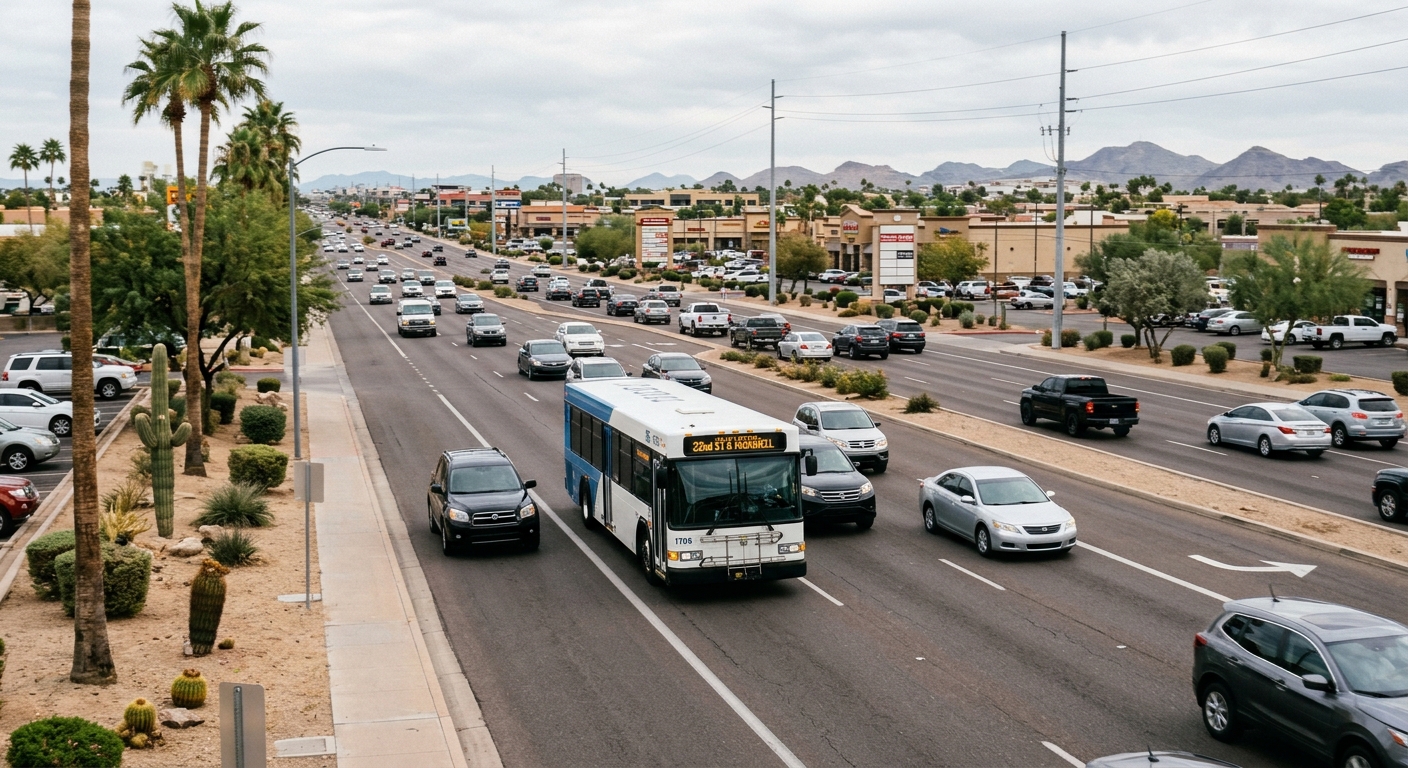
AI-generated illustration; not a photograph of the reported event.
- calendar_today November 12, 2026
Public Transit in Las Vegas: A Decade of Challenges and Progress
After returning to Las Vegas in 2012, one resident resolved to live car-free, inspired by years using Seattle’s robust public transportation. However, Las Vegas’ transit network fell short of expectations, highlighting major gaps compared to cities with established mass transit systems. The Regional Transportation Commission (RTC) operated the Bonneville Transit Center and services such as the Strip-Downtown Express bus, but many daily commutes—especially those beyond tourism corridors—remained lengthy and required significant extra walking. Meanwhile, summoning cabs was unreliable, and most locals preferred driving even for short trips.
Comparisons with Other Metropolitan Transit Systems
According to urban planner Ray Delahanty, who runs the CityNerd YouTube channel, Las Vegas has been slowly shifting toward a more conventional urban identity alongside city growth and suburban diversification. While RTC’s bus network achieves notable daily ridership and ranks 13th nationwide with nearly 56 million annual riders, Delahanty observes that public buy-in remains lukewarm compared to cities like Portland or Minneapolis, which have invested heavily in light rail and alternative transit.
Developments in Alternative and Advanced Transit Options
The RTC has expanded bike infrastructure extensively and developed a bike share program that now includes e-bikes within a growing downtown area. Transportation innovations such as the Las Vegas Monorail—now serving more than five million annual passengers—alongside rideshare offerings from Uber and Lyft, and autonomous taxi services by Uber, Waymo, and Zoox, reflect a city beginning to diversify its mobility options. The Vegas Loop, an underground electric car network operated by The Boring Company, has opened 10 stations and plans more expansions.
Launching Bus Rapid Transit (BRT) and Persistent Gaps
The RTC recently introduced its first Bus Rapid Transit (BRT) line, connecting Harry Reid Airport with the Las Vegas Medical District via Maryland Parkway. This elevated bus line features electric vehicles, Wi-Fi, dedicated traffic lanes, and signal priority for efficient travel. Despite these advances, transit options remain concentrated in central areas and around the resort corridor, leaving residents who work in these areas but live in outer neighborhoods or suburbs without adequate commuter transit choices.
Expert Analysis: Need for Regional and High-Capacity Solutions
Pushkin Kachroo, a UNLV professor specializing in intelligent transportation systems, underscores the absence of a regional high-capacity rail network and the challenges posed by car-centric sprawl and persistent traffic congestion. He calls for regional integration, especially connectivity between suburban areas and central employment districts. Kachroo contrasts the growing traffic volumes and frequent road construction today with far lighter conditions just two decades ago, noting that the city’s approach remains focused on freeway expansion, typified by billion-dollar highway projects like Project Neon.
The Case for Urban Rail and Integrated Transit Networks
Las Vegas is among the few large U.S. cities without an urban light rail system. In comparison, Portland’s MAX light rail and other cities’ airport rail connections highlight what Las Vegas lacks in commuter and airport transit. Kachroo and Delahanty suggest that investing in a true network—potentially with light rail lines running east–west and along the resort corridor, integrated with current modes like BRT, bike share, and ride-hailing—would align Las Vegas with peers and lay a foundation for greater suburban connectivity and transit-oriented development.
Looking Forward: Aspirations and Urban Development
Delahanty expresses hope for Las Vegas’ evolution, noting the potential for walkability and modern transit-oriented development. With the city’s population and tourism industry growing, the call for substantive public transit investment is set against rising costs of car ownership and freeway construction, pressing leaders and the community to consider alternatives that could fundamentally reshape mobility in the Las Vegas Valley.
Source: lasvegasweekly.com.


