
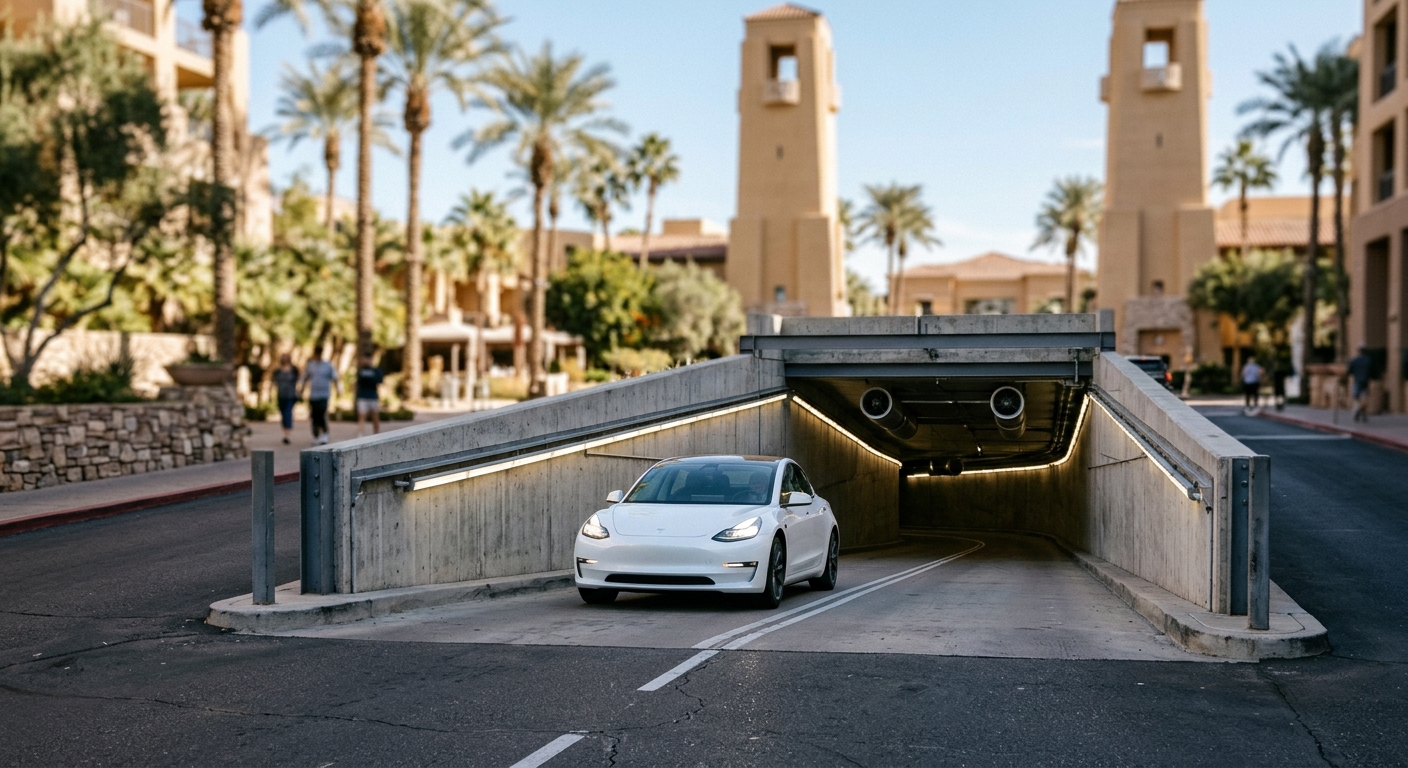
AI-generated illustration; not a photograph of the reported event.
- calendar_today November 13, 2026
Introduction: The Vegas Loop and Its Promised Impact
When the Westgate station of the Vegas Loop opened in January 2025, proponents claimed the underground Tesla transportation system would eventually carry up to 90,000 passengers per hour. The Boring Company, owned by Elon Musk, has touted this figure to key decision-makers like the Las Vegas Convention and Visitors Authority, Clark County commissioners, and the City of Las Vegas councilmembers. Their central argument has been that the system will substantially ease congestion on city streets. However, these claims are drawing scrutiny from transportation experts.
Expert Concerns: Effectiveness and Public Transit Principles
Some urban transportation specialists, including UNLV assistant professor of public policy Benjamin Leffel, question both the promised performance and the concept itself. “It’s antithetical to public transportation, but they’re selling it as the opposite. … It’s a nice little gimmick. But that’s all it is,” Leffel commented. According to a June report in The Guardian, the maximum demonstrated capacity of the Vegas Loop has been six Tesla vehicles per minute—translating to roughly 2,400 passengers an hour, a figure far below its ambitious goal.
Development Progress and Transit Numbers
The Boring Company has opened ten Vegas Loop stations across the Las Vegas Convention Center and the Strip’s resorts. Since the first convention center station debuted in 2021, four million passengers have reportedly used the service. Approvals have been granted for as much as 68 miles of tunnels and 123 stations, potentially adding stops at destinations like Allegiant Stadium and UNLV.
Despite repeated requests, The Boring Company did not provide comment on current capacity benchmarks or future projections.
Funding Structure and Planning Implications
The Vegas Loop’s unique financing model sets it apart from traditional public transportation projects. Under current arrangements, government officials permit digging of the tunnels, with The Boring Company funding the construction and collecting fares. Meanwhile, hotels and other private enterprises pay for their own stations. While proponents point to the absence of direct public expenditures as a benefit, Leffel cautions it is not a “win-win scenario.”
Leffel notes, “There are a few distinct risks. One is that [stations] are generally not going to be decided based on maximum public benefit. It has nothing to do with convenience or proximity to the maximum [number of people]. It shifts the priorities of planning away from that to the highest bidder. … Two, the city is forfeiting its ability to easily build a proper metro in the future.”
Comparisons to Rail and Broader Transit Goals
Advocates for rail transportation argue that systems like light rail can move over 30,000 passengers per hour and have a proven ability to relieve urban congestion. Leffel concludes that investment in robust mass transit infrastructure, including light rail, would support a stronger, more diverse economy in Las Vegas. “I think our economy will do better once we can transport people more, because not everyone can afford a car. Who’s using the buses right now? The working class. You want a thriving, diverse economy? Pay a teeny bit more in taxes and get a light rail, because you might use it too.”
Conclusion: Ongoing Questions for Las Vegas Transit’s Future
As the Vegas Loop expands with more stations and tunnels, the debate continues over its true effectiveness versus other forms of public transportation. With both public officials and private entities deeply involved in shaping the city’s transportation infrastructure, the long-term impacts of current decisions remain to be seen.
Source: lasvegasweekly.com.


