- calendar_today September 1, 2025
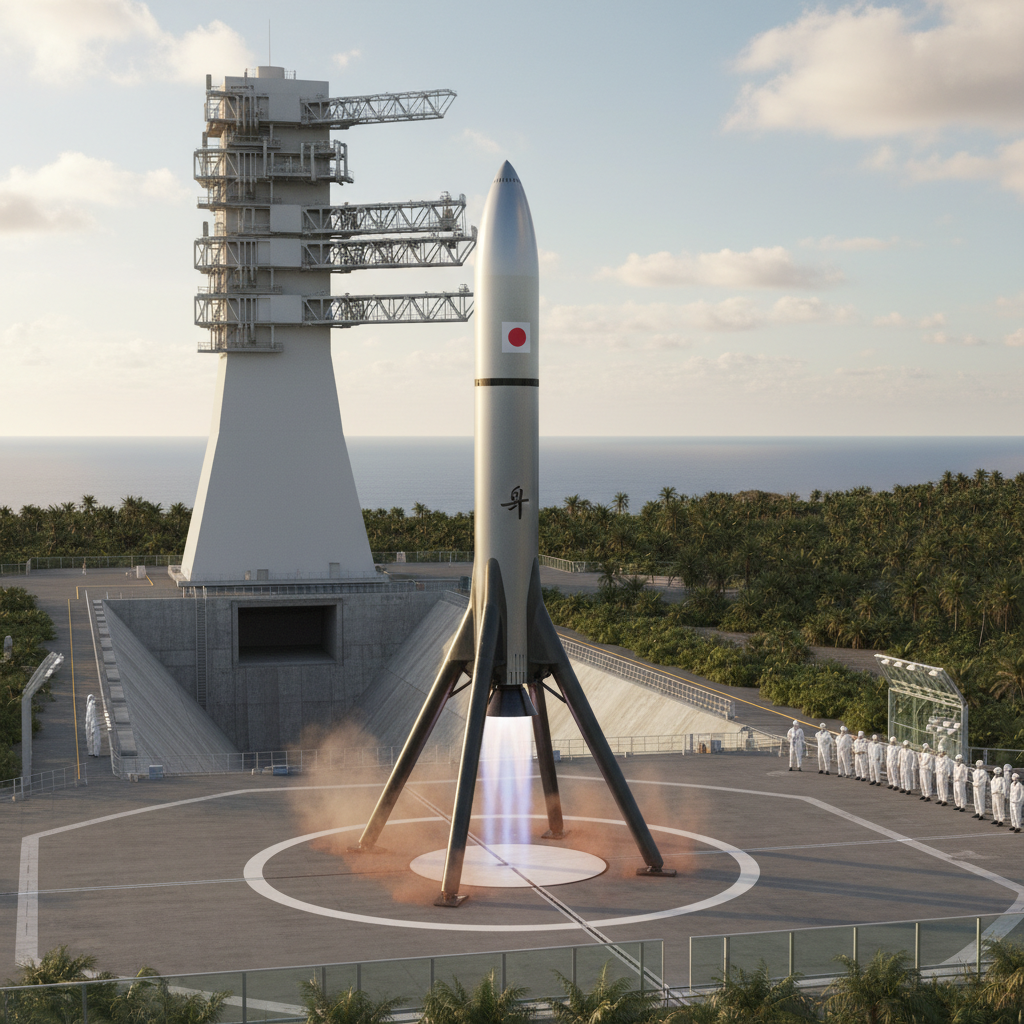
Though it didn’t happen on the road, Honda has made a breakthrough that would astound many. The firm formally carried out a successful reusable experimental rocket launch and landing test. This marks the first time the Japanese manufacturer has safely returned one of its rockets to Earth from flight, so extending it into the developing field of private space technology.
The test was conducted at Taiki Town, Japan, a Honda-owned site in an area rapidly developing a reputation as a space-oriented one. Measuring almost 21 feet tall and weighing more than 2,800 pounds, the rocket soared for exactly 56.6 seconds and attained an elevation of 890 feet. The landing, however, caught most attention: the rocket touched down on its four retractable legs and rested 37 centimeters from the target.
Not One-Off: The Technology Driving the Flight
There was no haphazard experiment here. Though most of the work has gone understated behind closed doors, Honda has been preparing its entry into space since 2021. Particularly in areas like automated driving technology, the company has been combining its great engineering expertise with ideas first developed for its vehicles.
Cross-over is crucial. Sensors, precision mapping, and real-time decision-making—the same tools meant to help vehicles negotiate city streets—are now being modified to control the vertical flight path of a rocket and guarantee safe landing. Honda is reworking what it already does well and using it to the heavens instead of starting an aerospace program from nothing.
The retractable legs of the rocket, which enabled both launch and landing, draw attention to Honda’s emphasis on reusability—a quality that has evolved as the gold standard in contemporary spaceflight. Costs are much reduced and access to space becomes more realistic if a company can land and rework the same rocket several times.
What is ahead? Honda Dreams Suborbital Space by 2029
Although the test marks a major milestone, Honda is not labeling it as a finished good. The company is still in the basic research stage and no decisions regarding commercializing the technology have been taken yet.
Having said that, a clear objective is just waiting ahead. By 2029 Honda wants to occupy suborbital space. This entails learning to launch rockets beyond the Kármán line, the unofficial limit of space, roughly 62 miles (or 100 kilometers) above sea level.
A big technical step would be reaching suborbital flight. Still, that height falls short of what is required to put satellites into orbit—something only a small number of private businesses worldwide, including SpaceX and Blue Origin, can now do.
Honda’s passion for rockets is likewise intimately related to the mounting need for satellite deployment. Small satellites are becoming more and more important of a component of the tech infrastructure as sectors depend more on data flow, location services, and communication systems. Honda seems to be positioned to satisfy internal demand, maybe introducing its own systems one day to complement its automotive and technological ecosystem.
Right now, though, the business is keeping its choices open. Although the test reveals that the technical groundwork is in place, considerable distance still has to be travelled before full-scale space operations take off.
Regarding the launch site, Taiki Town in Japan’s Hokkaido area is turning out to be a wise decision strategically. Supported by cooperation between JAXA and local authorities, the region is under development as a space research and testing hub. Honda’s activities there accentuates the momentum and suggests further developments from this “space town.”
Under a minute, under a thousand feet, this successful rocket test would seem to be a little flight on paper. In practice, though, it is a far more significant shift. Usually known for its ground-based vehicles, Honda is starting to develop a name in the heavens.
And this could only be the start with a suborbital deadline for 2029.