- calendar_today August 15, 2025
.
More than 30 years after he was imprisoned for the murders of his parents, Erik Menendez was denied parole by a California board this week. The three-person panel ruled that Erik, who was convicted along with his brother Lyle for the 1989 killings, continues to be “an unreasonable risk to public safety.”
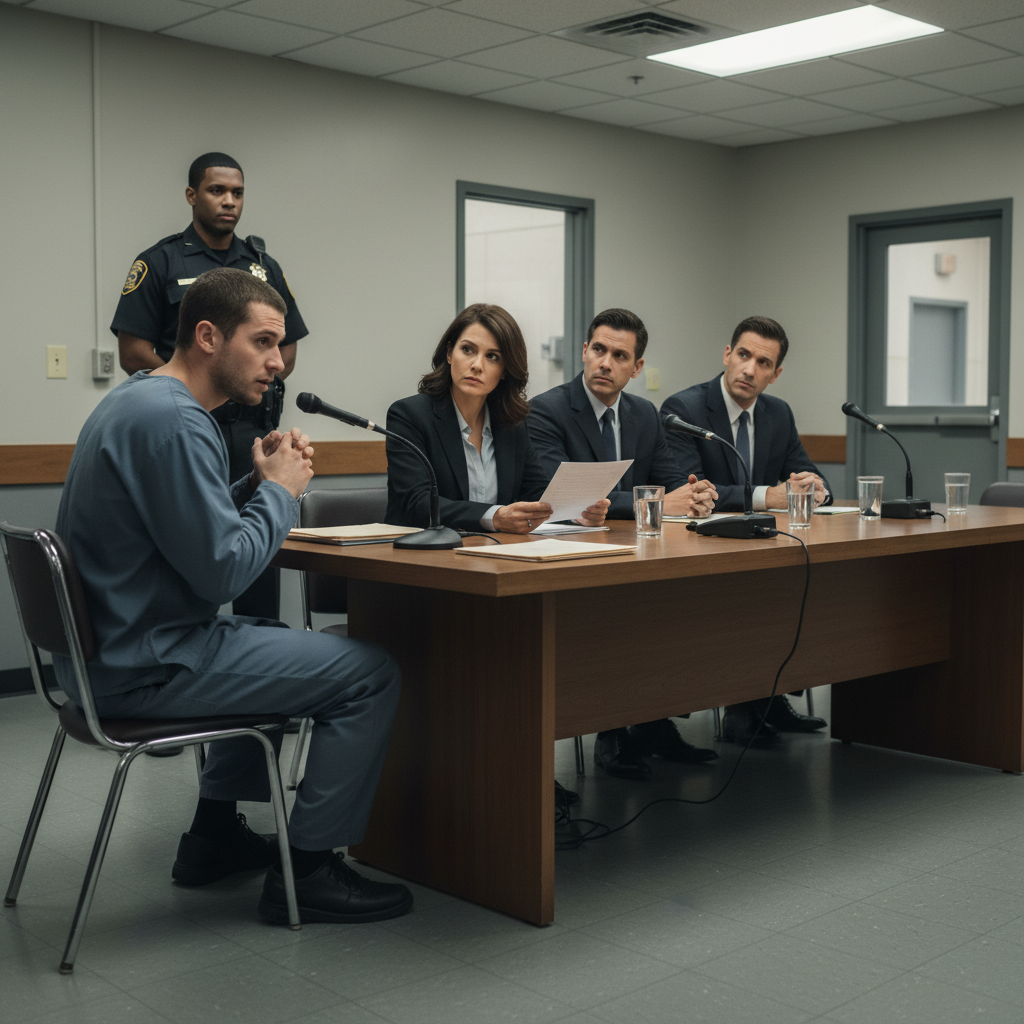
The parole hearing was a nearly 10-hour session focused on Erik’s record of rehabilitation and prison behavior, as well as the evidence for and against his release. The Los Angeles County District Attorney’s office had representatives present and encouraged the panel to deny Erik parole. Erik’s defense team was also joined by more than a dozen relatives testifying in support of his release. The board ultimately sided with the prosecutors, citing Erik’s history of crimes as a teenager, the nature of the double murder, and “serious violations” of prison rules as justification for their decision.
Now in his 50s, Erik will be eligible to request parole once again in three years. In explaining the ruling to Erik, Parole Commissioner Robert Barton said the decision was “not based only on the horrific nature” of the murders but on his behavior in prison as well.
“One can be dangerous to public safety in a variety of ways, through many forms of criminal conduct, including the ones you were convicted of in prison,” Barton said. He encouraged Erik to rely on his “great support network” of friends and family to prevent future violations.
Erik has had nine rule violations at various facilities since he began his sentence, including several drug charges and possession of contraband, including a cell phone and lighter. Several corrections staff members who have worked with Erik have written letters in his defense, calling him a “model inmate.” Barton, however, asked Erik if that was a true assessment of his behavior in light of his prison rule violations. Erik replied that he did not start to believe he could ever be released until last year and that he also started to change his “consequential thinking” around the same time.
Many of the family members who testified on Erik’s behalf were emotional, discussing how the murders have led to three decades of pain, anguish, and division in the family. “To say that our family has experienced pain does not quite capture what the last 35 years have been like,” said Tiffani Lucero-Pastor, great-niece of the Menendez brothers’ mother, Kitty. “It has divided us. It has caused us panic and anxiety.”
Others mentioned that Kitty’s failure to address alleged incidents of abuse in the home had intensified the level of fear in the brothers. Karen Mae Vandermolen-Copley, Kitty’s niece, stated that her aunt’s “absence of protection deepened their fear and confusion.” The only known family member to be opposed to Erik’s parole was Kitty’s brother, Milton Andersen, who died earlier this year.
In a statement to CNN after the decision was made, the family called the ruling “disappointing, but we respect the decision.” “Our belief in Erik remains unwavering,” the statement read. “His remorse, growth, and the positive influence he has had on those around him speak for themselves. We will continue to stand by him and hold to the hope he can return home soon.”
Lyle Menendez to Face Parole Hearing, Governor Holds Final Say
Erik’s older brother, Lyle Menendez, is scheduled to go before the parole board next week on Friday. His case is slightly different from his brother’s, and the board will review his record of prison behavior and rehabilitation. Although Lyle has committed slightly fewer disciplinary infractions than Erik, some of the acts he committed around the time of his parents’ murder could complicate his efforts at release.
During the original 1993 trial, Lyle said he shot his parents multiple times with a shotgun at close range. On Tuesday, Barton noted that his mother’s death was “devoid of human compassion.”
In addition, Lyle has also struggled to maintain a consistent narrative around alleged abuse by his father. At various points, he also asked his girlfriend to lie about her own abuse by their father. He once asked her to claim that their father had drugged and raped her, the prosecution said. These details, combined with a supportive group of family members also planning to testify on Lyle’s behalf, will give the panel a full view of his case. Like Erik, Lyle will be eligible for parole for the first time after he was resentenced in May from life without parole to 50 years to life.
The parole hearings are the latest development in a murder trial that has captured the public’s attention for decades as one of the most high-profile in California history. Lyle and Erik’s defense centered on their fears after a long history of abuse by their father and stepmother. Prosecutors, however, said the murders were not a result of domestic violence but were instead financially motivated because of their father’s fortune.
Governor Gavin Newsom ultimately has the final say on whether the brothers remain in prison or become eligible for release. Under a 1988 state law, the governor has the power to approve, deny, or modify parole board decisions for all people convicted of murder and sentenced to indeterminate terms like the Menendez brothers. The decision will be internally reviewed for up to 120 days, and Newsom then has 30 days to either release, deny, or modify the order.