- calendar_today September 2, 2025
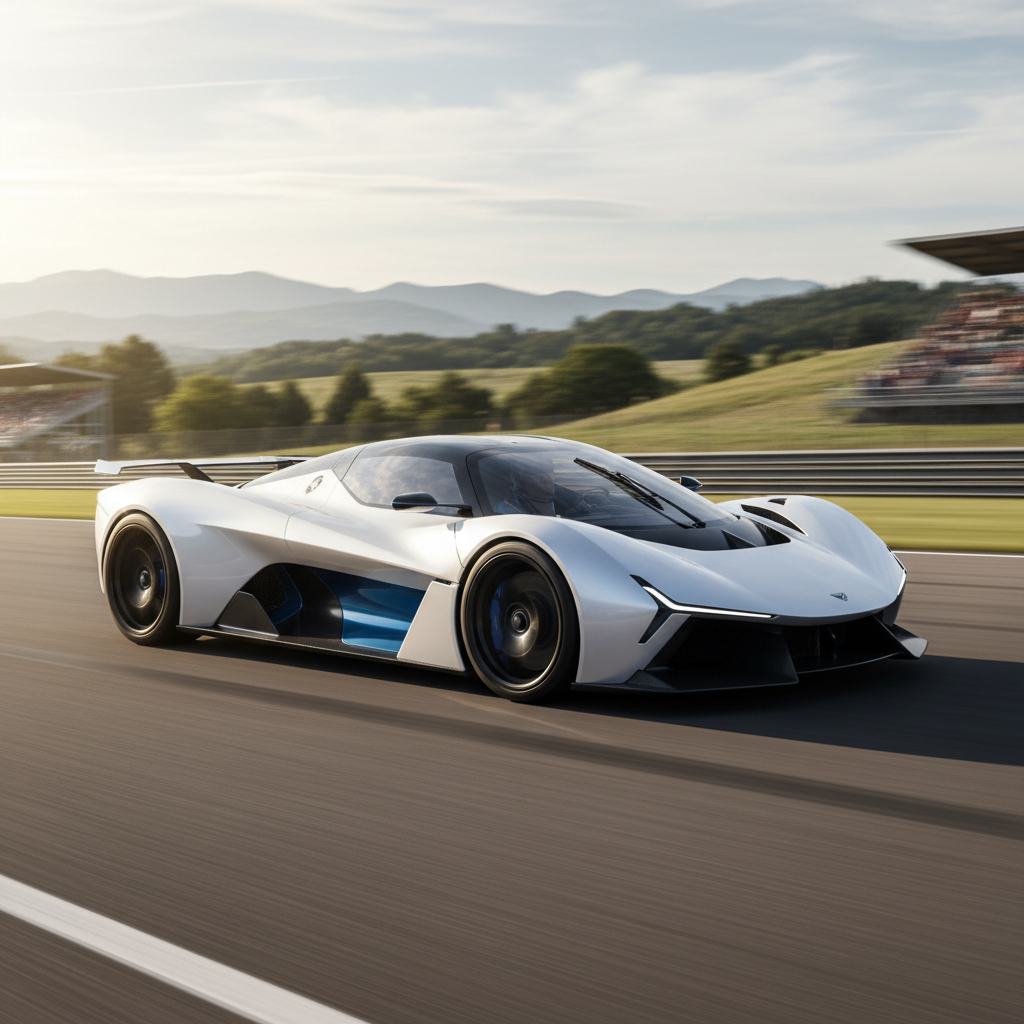
Long America’s response to Europe’s best supercars, the Corvette has been But Chevrolet is rewriting the script when the ZR1X arrives, not merely responding to the call. This future beast is the most extreme, powerful, and sophisticated Corvette ever built with a hybrid powertrain pushing out 1,250 horsepower.
Revealed alongside the brand-new ZR1, the ZR1X is expected to arrive in late 2025, so redefining American performance engineering.
Designed for Speed and Driven by Creativity
Chevrolet’s recently created twin-turbocharged 5.5-liter V8 forms the basis of the ZR1X; it alone produces 1,064 hp. But adding a front electric motor run by a 1.9 kWh battery pack turns this car into a next-generation hybrid.
With an extra 186 hp and 145 lb-ft of torque produced by this arrangement, the car’s overall output is 1,250 hp (919 kW)—a shockingly high number that leaps the ZR1X from 0–60 mph in under two seconds.
By increasing capacity by 26%, Chevrolet improved the battery system over that of the E-Ray, so enabling more power draw and more robust electric assistance. Although the hybrid system weights almost 500 pounds (227 kg) more than the Z51 Stingray, the ZR1X still reaches a top speed of 233 mph (375km/h), exactly the same as the ZR1.
Chevrolet proved it wasn’t only theoretical by testing this figure using extra weight to replicate the heavier build of the ZR1X.
The front axle disconnects automatically at 160 mph (257 km/h) to maximize performance at high speed, so lowering drivetrain drag—10 mph more than the disengagement threshold.
Software-Defined Performance
The way Chevrolet improved the software marks maybe the biggest change from the E-Ray to the ZR1X. Under stress or from regen torque imbalances, the front motor of the E-Ray periodically disengaged unexpectedly. Through clever sensor calibration and torque control, the ZR1X fixes those problems.
Chief Engineer Josh Holder clarified that tire deformation under hard acceleration used to confuse sensors in past years. The revised system now averages those readings, maintaining the car’s stability even under one G of both lateral and longitudinal forces simultaneously.
Braking is equally developed. Along with 10-piston Alcon calipers, the ZR1X brings 16.5-inch carbon-ceramic rotors—the biggest ever on a Corvette. This arrangement produced amazing 1.9 G of deceleration during testing at the Nürburgring, so confidently slowing the car from 180 to 120 mph.
For hard-bitten consumers, Chevy also included track-oriented drive modes including Endurance and Qualifying. Designed to release all 1,250 hp on demand for short bursts, a new Push to Pass capability—perfect for overtaking or lap time attacks—perhaps represents the most dramatic addition.
Even the braking mechanism operates more cleverly. The rear brakes are triggered automatically to preserve consistent handling when the car is regenerating power through the front axle.
Performance always comes first, thus electric-only driving range—probably 3–5 miles (5–8 km) at under 45 mph—remains a minor detail.
Offering same performance, the ZR1X may drastically undercut hypercars from Ferrari, McLaren, or Bugatti in terms of cost from a ZR1 base price of $174,995.