- calendar_today August 7, 2025
BYD has taken electric vehicle technology to new heights through the release of its revolutionary “super e-platform.” The new system incorporates 10C charging capabilities and 1,000 kW DC chargers which will significantly decrease charging times to levels approaching traditional gasoline refueling speeds.
BYD’s innovation centers around providing an impressive 249-mile (400 km) range in a mere five minutes. This achievement dwarfs current industry standards: Tesla Superchargers deliver a maximum output of 250 kW while Electrify America achieves 350 kW and Formula E’s high-performance chargers reach up to 600 kW.
China’s Charging Leap: BYD’s “Super e-Platform” Redefines EV Refueling
Chairperson Wang Chuanfu from BYD revealed their goal to develop electric vehicle charging that matches gasoline refueling speed and convenience. The “super e-platform” developed by BYD stands at the heart of their vision because it features innovative battery technology that supports rapid charging at 10C speed. The technology enables full battery charging within five minutes when operating at optimal conditions which represents a major advancement in electric vehicle charging efficiency.
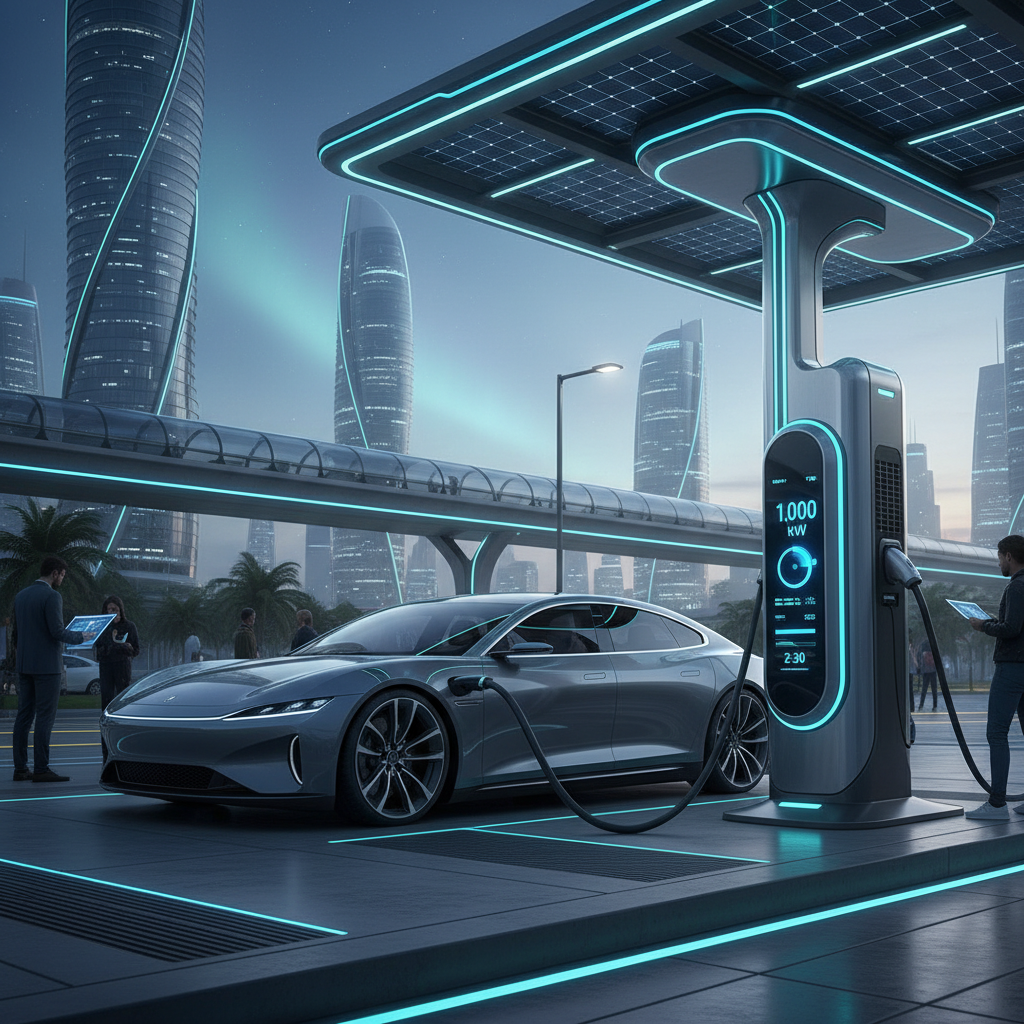
The rapid charging system relies heavily on 1,000 kW DC chargers which provide swift energy transfer to cut down the time drivers need to charge their vehicles. The goal of this technology is to remove the primary obstacle to widespread EV adoption which is the time required to charge vehicles.
BYD plans to build over 4,000-megawatt chargers throughout China to establish a strong network that supports its latest electric vehicle range. The sleek Han L sedan and versatile Tang L SUV represent the initial vehicles that will take full advantage of this technological progress to deliver enhanced performance and convenience for electric vehicle consumers.
These advancements enable BYD to speed up the shift to electric vehicles while changing what consumers expect from their transportation solutions. The reduced charging times that match traditional fuel refueling speeds help bridge the divide between electric vehicles and their conventional counterparts thus encouraging more consumers to consider electric vehicles as a viable option.
BYD is expanding its operations worldwide, especially throughout Europe but encounters substantial political hurdles when trying to penetrate the US market. Congressional members from both political parties have taken active steps to block Chinese EV manufacturers from entering the US market based on national security risks and economic competition fears.
We must recognize the significant differences between range estimation standards. BYD’s 249-mile range figure uses the CLTC standard which produces more optimistic results than US EPA testing standards. EPA testing procedures would probably yield a reduced range compared to what was initially reported.
Other automakers especially those based in the US might still consider licensing BYD’s technology despite existing challenges. Licensing agreements have the potential to speed up the implementation of faster charging standards in the United States which could help overcome political obstacles and extend rapid charging benefits to more users.
The 1,000 kW chargers deliver substantial energy quantities to batteries extremely fast. Battery temperature together with the state of charge and the quality of charging stations influence the real-world efficiency of charging systems. The vehicle’s efficiency rating in km/kWh contributes to how much range is added when charging.
The “super e-platform” from BYD marks a major breakthrough in EV charging technology that could boost EV adoption rates by resolving the essential problem of charging duration. The company’s dedication to developing strong charging networks throughout China strengthens its leadership status in the worldwide electric vehicle industry.